







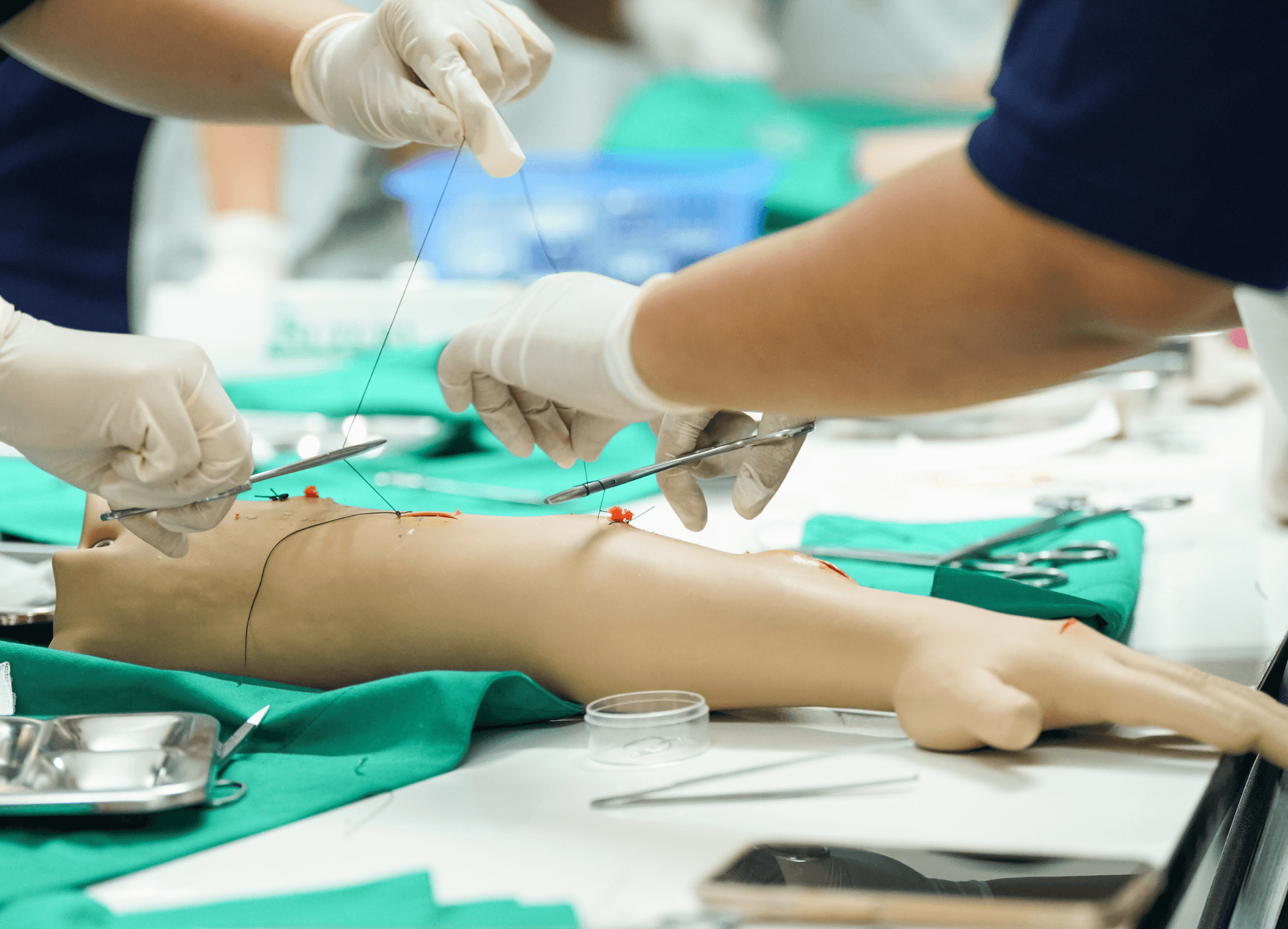
Are you curious about hands-on learning in nursing without the risk? Clinical simulation in Australia is revolutionising nursing education by providing realistic, safe environments where students can practice and refine their skills.
For international students who want to study nursing in Australia, clinical simulation offers immersive experiences in patient care, emergency scenarios, and advanced clinical procedures. This guide explores how simulation is shaping the future of nursing education and preparing graduates for real-world healthcare challenges.
What Is Clinical Simulation in Nursing?
Clinical simulation is an educational technique where nursing students practice patient care in a controlled, realistic environment using manikins, virtual reality, and interactive scenarios.
Key Components of Clinical Simulation:
- High-fidelity manikins that mimic real patient responses
- Virtual reality simulations for critical care, surgery, or emergency scenarios
- Scenario-based learning for communication, teamwork, and decision-making
- Debriefing sessions to review performance and improve clinical reasoning
Why It’s Important in Australia
- Enhances clinical competence without risking patient safety
- Improves decision-making and critical thinking skills
- Prepares students for diverse healthcare settings, from hospitals to rural clinics
- Supports compliance with national nursing standards and patient safety protocols
By incorporating clinical simulation in nursing education Australia programs, students gain confidence, hands-on skills, and exposure to rare or complex clinical situations that may not arise during traditional clinical placements.
Benefits of Clinical Simulation
1. Safe Learning Environment
Students can make mistakes and learn from them without endangering patients.
2. Hands-On Experience
Simulations replicate real-world scenarios, including emergency care, critical thinking challenges, and patient interactions.
3. Enhanced Clinical Skills
Practicing procedures, assessments, and interventions improves accuracy and confidence.
4. Improved Decision-Making
Scenario-based learning develops critical thinking and teamwork skills vital for nursing practice.
5. Accessible & Flexible Learning
Virtual and augmented reality simulations allow students to train anywhere, complementing hospital-based clinical placements.
How Clinical Simulation Works in Nursing Education
Step 1: Orientation
Students learn the simulation environment, equipment, and scenario objectives.
Step 2: Simulation Session
Students engage in realistic scenarios using manikins or virtual platforms, performing assessments, administering treatments, and making clinical decisions.
Step 3: Observation & Feedback
Instructors observe performance and provide feedback on technical and communication skills.
Step 4: Debriefing
Students discuss what went well, what could improve, and lessons learned.
Step 5: Integration with Clinical Practice
Simulation complements hospital placements, allowing students to apply learned skills to real patient care situations.
Career Outcomes & Future Scope
Opportunities for Graduates
- Registered Nurse with strong clinical competence
- Advanced Practice Nurse trained in high-fidelity simulation
- Clinical Educator or Nurse Trainer
- Nurse Researcher specializing in simulation-based learning
Salary Expectations:
- Graduate RN: AUD 65,000–$80,000
- Experienced RN: AUD 85,000–$100,000
- Clinical Nurse Educator or Specialist: AUD 100,000+
Future Scope:
- Growing use of simulation in hospitals, nursing schools, and training programs
- Supports innovative teaching methods and patient safety
- International recognition and mobility for Australian-trained nurses
- Prepares nurses for advanced practice, emergency, and specialised care
Clinical simulation is a transformative tool that bridges theory and practice, ensuring students are competent and confident in real-world clinical settings.
Start Your Future in Nursing with Expert Guidance
Clinical simulation in nursing education in Australia equips students with the skills, confidence, and critical thinking needed to excel in modern healthcare settings. By combining immersive scenarios with traditional clinical placements, students gain a competitive edge and are better prepared for real-world nursing challenges.
Ready to experience the future of nursing education? Explore accredited programs, clinical simulation placements, and admission guidance at StudyNursing.com.au — your trusted partner in Australian nursing education.