







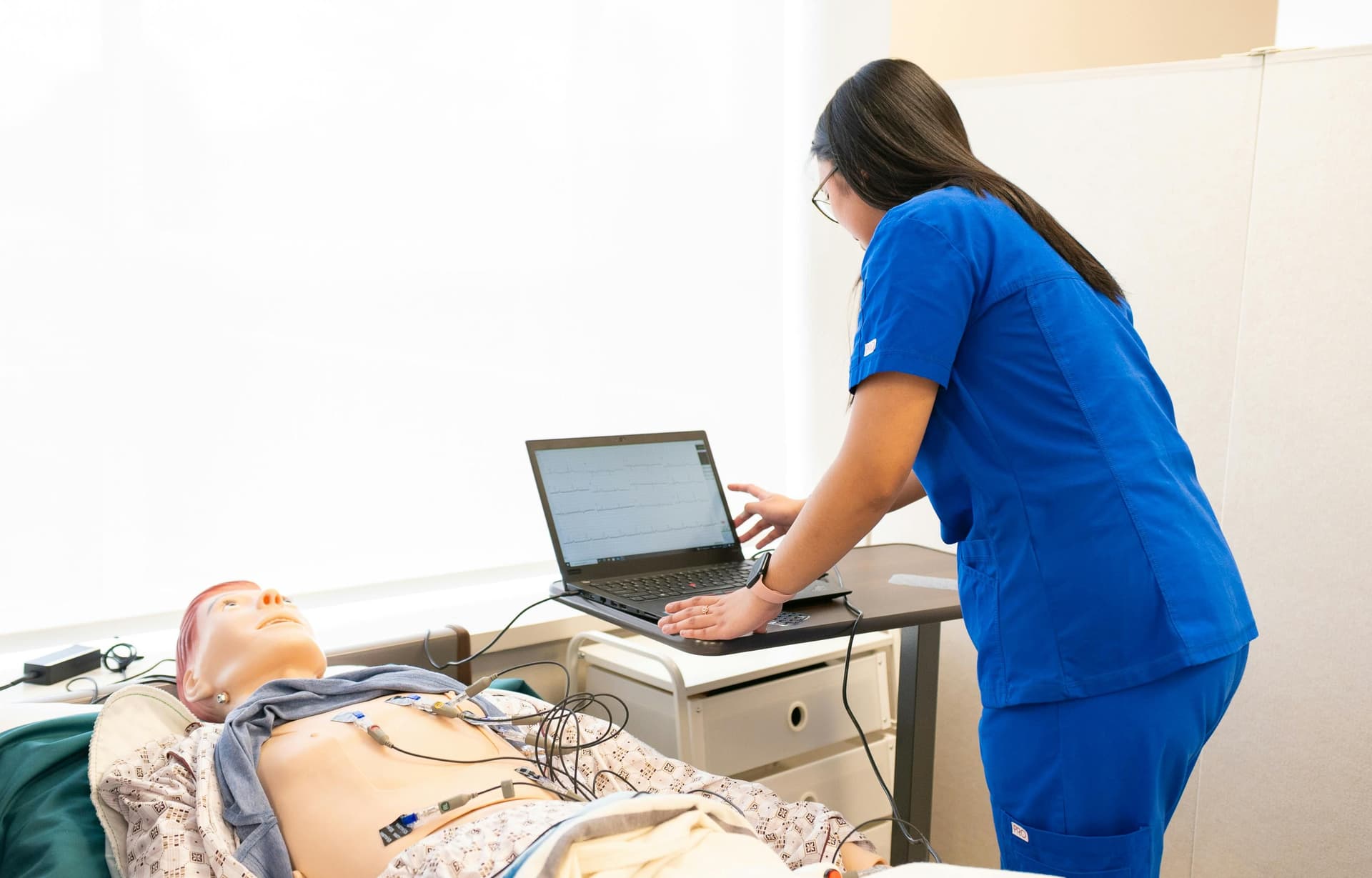
As nursing education continues to evolve in Australia, online and blended nursing programs are increasingly integrating virtual simulation technology to teach essential clinical skills. For students planning to study nursing in Australia—especially international students—virtual simulations provide a safe, interactive, and flexible learning environment to practice patient care, clinical decision-making, and procedural skills without being physically present in a hospital or skills laboratory.
These simulations help bridge the gap between theoretical knowledge and real-world clinical practice. By exposing students to realistic patient scenarios before entering clinical placements, virtual simulations build confidence, competence, and clinical judgment, which are critical for success in Australian healthcare settings.
This guide explains how virtual simulations are used in Australian nursing courses, the types of scenarios students experience, the benefits of simulation-based learning, and how nursing students can maximise their learning outcomes through this innovative educational approach.
What Are Virtual Simulations in Nursing Education?
Virtual simulations are computer-based or web-based clinical learning tools that replicate real healthcare environments and patient interactions. Using advanced software, students engage with virtual patients who respond dynamically to clinical decisions, allowing realistic practice in a controlled setting.
In Australian nursing programs, virtual simulations allow students to practice:
- Comprehensive patient assessments and vital signs monitoring
- Medication administration and dosage calculations
- Emergency and acute care response scenarios
- Infection control and patient safety procedures
- Clinical communication, teamwork, and documentation skills
- Ethical decision-making and prioritisation of care
These simulations closely reflect the standards and expectations of Australian healthcare systems, helping students prepare for both clinical placements and NMBA registration requirements.
Why Virtual Simulations Are Important in Online Nursing Programs
Virtual simulations play a crucial role in modern nursing education, particularly for online and blended nursing courses in Australia.
1. Safe and Risk-Free Learning Environment
Students can make clinical decisions, manage complications, and even make mistakes—without any risk to real patients. This encourages learning through experience and reflection.
2. Flexible and Accessible Practice
Virtual simulations can be accessed anytime and from anywhere, making them ideal for online nursing students, working students, and international applicants preparing for study in Australia.
3. Bridging Theory and Clinical Practice
Simulations reinforce theoretical concepts learned through lectures, readings, and online modules, helping students apply knowledge in realistic healthcare scenarios.
4. Standardised Clinical Exposure
All students experience the same high-quality clinical scenarios, ensuring consistent skill development regardless of placement availability.
5. Preparation for Clinical Placements
By practising beforehand, students enter hospital and community placements with greater confidence, competence, and professional readiness.
How Virtual Simulations Work in Nursing Courses
Virtual simulations are carefully embedded into the nursing curriculum and aligned with course learning outcomes.
Typical Simulation Process
Scenario Setup
Students are introduced to a virtual patient and a healthcare scenario based on real clinical cases.
Interactive Decision-Making
Students choose assessments, interventions, medications, and care priorities in real time.
Immediate Feedback
The system provides instant feedback on clinical decisions, highlighting correct actions and areas for improvement.
Progress Tracking
Performance data is recorded, allowing students and educators to monitor clinical competency development.
Curriculum Integration
Simulations are linked directly to lectures, assessments, and clinical skills requirements to reinforce learning objectives.
Advantages of Virtual Simulations in Nursing Education
1. Safe Clinical Skills Development
Students can practise complex or high-risk procedures without pressure, improving learning confidence.
2. Ideal for Online Nursing Programs
Virtual simulations allow students to develop clinical skills remotely while completing theory components online.
3. Exposure to Complex and Rare Scenarios
Students can experience situations such as cardiac arrest, mental health crises, or ICU care that may not occur during limited clinical placements.
4. Immediate Feedback and Assessment
Real-time evaluation enhances clinical judgment, critical thinking, and decision-making skills.
5. Supports Different Learning Styles
Interactive, visual, and scenario-based learning improves engagement and knowledge retention.
Tip: Actively engaging with simulation exercises and reviewing performance reports significantly improves learning outcomes.
Learn more about accredited nursing courses in Australia at StudyNursing.com.au
How Virtual Simulations Are Integrated into Online Nursing Programs
Step | Description | Purpose |
Orientation | Students learn how to use simulation platforms | Familiarisation with virtual tools |
Scenario Selection | Relevant patient cases are assigned | Align with course objectives |
Interactive Practice | Students perform assessments and interventions | Develop clinical reasoning |
Feedback & Reflection | Immediate evaluation provided | Identify strengths and gaps |
Assessment & Reporting | Performance contributes to grading | Ensure competency before placements |
Virtual Simulation vs Traditional Nursing Labs
Feature | Virtual Simulation | Traditional Lab |
Accessibility | Anytime, online | Scheduled on campus |
Risk to Patients | None | Minimal, supervised |
Flexibility | High | Limited |
Scenario Variety | Wide and repeatable | Resource-dependent |
Feedback | Immediate and automated | Instructor-dependent |
Career Outcomes and Employability Benefits
Virtual simulations help nursing students prepare for real-world clinical practice in Australia. Students who actively engage with simulation-based learning demonstrate:
- Stronger critical thinking and clinical judgment
- Increased confidence in patient care procedures
- Improved readiness for hospital and community placements
Simulation experience is particularly valuable for careers in:
- Intensive care and emergency nursing
- Mental health and psychiatric nursing
- Leadership and supervisory nursing roles
- Aged care, disability, and palliative care
- Community and primary healthcare settings
For international nursing students, virtual simulation training enhances employability, as Australian healthcare providers increasingly recognise simulation-based learning as an essential part of professional preparation. When combined with NMBA-accredited nursing programs, virtual simulations support both registration and global career mobility.
Virtual Simulation Is Transforming Online Nursing Education in Australia
Virtual simulations are revolutionising online nursing education in Australia by offering flexible, interactive, and safe pathways to develop essential clinical skills. Through realistic patient scenarios, students gain confidence, improve clinical decision-making, and prepare effectively for real-world healthcare environments.
If you’re exploring innovative nursing programs with online learning options and simulation-based training, StudyNursing.com.au is your trusted partner for nursing education in Australia.
Enquire Now to explore accredited nursing courses and career pathways